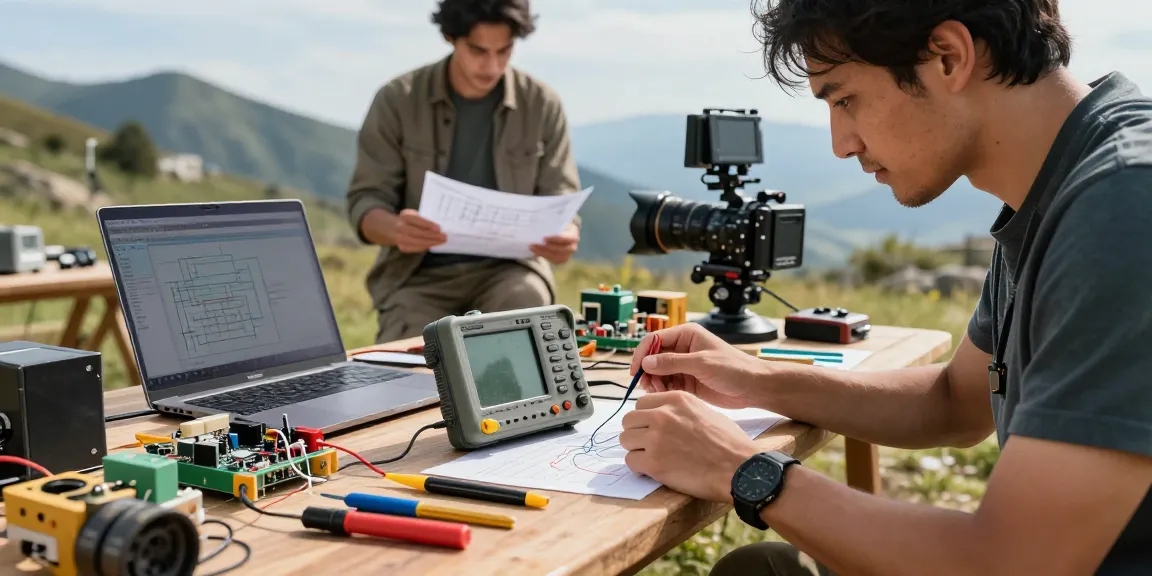
Understanding Pocket Oscilloscopes
In today’s fast-paced electronics world, having the right tools is crucial for both professionals and enthusiasts alike. One such tool, the pocket oscilloscope, has gained immense popularity due to its portability and versatility. This article delves into the specifics of pocket oscilloscopes, their features, benefits, applications, and how to choose the right one for your needs.
What is a Pocket Oscilloscope?
A pocket oscilloscope is a compact, portable device designed for measuring and analyzing electrical signals. Unlike traditional benchtop oscilloscopes, pocket oscilloscopes prioritize mobility without sacrificing essential functionalities. They come equipped with features that are vital for engineers, hobbyists, and technicians who need to conduct field measurements or troubleshooting tasks.
Key Features and Benefits
- Portability: Lightweight and battery-operated, pocket oscilloscopes can be easily carried anywhere, making them ideal for on-the-go testing.
- User-Friendly Interfaces: Most pocket oscilloscopes have intuitive controls and displays, allowing users to navigate settings and view data effortlessly.
- Multiple Functions: Many models incorporate additional features such as multimeter functions, data storage, and waveform analysis capabilities, enhancing their utility.
- Versatile Bandwidth Options: Availability in a range of bandwidths (often from 10 MHz to 100 MHz) ensures that users can select a model that meets their specific testing requirements.
Applications in Various Industries
Pocket oscilloscopes find applications across numerous fields due to their adaptability. Some notable areas include:
- Automotive Diagnostics: Technicians use these devices to monitor and analyze signals from vehicle electronics, aiding in quick troubleshooting.
- Educational Settings: Educators and students benefit from the simplicity and portability of pocket oscilloscopes, making them excellent for laboratory experiments and demonstrations.
- Consumer Electronics Development: Engineers rely on pocket oscilloscopes for testing and measuring signals in new gadgets and devices.
Choosing the Right Pocket Oscilloscope
When selecting a pocket oscilloscope, several factors should guide your decision-making process. Understanding these elements can greatly influence the performance and usability of your chosen device.
Factors to Consider When Selecting
- Bandwidth: Depending on the nature of your work, the required bandwidth can vary. A higher bandwidth provides better signal resolution and accuracy.
- Sampling Rate: Look for a model with a sufficient sampling rate (e.g., 250 MS/s) for effectively capturing fast-changing signals.
- Number of Channels: Some applications may require analyzing multiple signals simultaneously; choose a model with two or more channels accordingly.
- Additional Functions: Determine whether you need additional features such as a built-in multimeter, USB connectivity, or advanced triggering options.
Comparing Different Models
As you explore various pocket oscilloscopes, it’s vital to compare models based on features, price, and reviews. For instance, HANMATEK offers several options ranging from basic to advanced models, catering to both entry-level users and seasoned professionals.
Budgeting for Your Purchase
Expect to find pocket oscilloscopes in diverse price ranges, typically from $100 to several hundred dollars depending on features. Assess your budget and consider the long-term value each model provides for your specific requirements.
Maximizing Functionality and Performance
Purchasing a pocket oscilloscope is just the beginning; optimizing its performance is key for effective testing and analysis.
Essential Accessories for Enhanced Use
- Probes: High-quality probes are essential for accurate measurements and can significantly affect performance.
- Protective Cases: A sturdy case can safeguard your oscilloscope from physical damage during transport.
- USB Cables: Useful for data transfer and charging, always have an extra USB cable handy.
Maintenance Tips for Longevity
To ensure your pocket oscilloscope remains functional for years, follow these maintenance tips:
- Regularly clean the screen and connectors to avoid signal interference.
- Store it in a protective case to prevent damage when not in use.
- Periodically check for firmware updates to ensure optimal performance.
Common User Mistakes and How to Avoid Them
Many users encounter common pitfalls while using pocket oscilloscopes. Awareness of these mistakes can enhance usability:
- Neglecting Calibration: Always calibrate your device according to the manufacturer’s guidelines to ensure accuracy.
- Inadequate Power Management: Ensure the battery is charged, and familiarize yourself with power-saving features.
Real-World Applications of Pocket Oscilloscopes
The versatility of pocket oscilloscopes shines through in various practical scenarios.
Field Testing for Automotive Diagnostics
Automotive engineers often rely on pocket oscilloscopes to diagnose electrical issues. For instance, testing signal integrity in vehicle sensors can lead to timely repairs and improved vehicle performance.
Utilizing in Education and Training Environments
In educational settings, pocket oscilloscopes provide students with hands-on experience in electronic testing. They can conduct various experiments involving waveform analysis, component testing, and more, fostering a practical understanding of theoretical concepts.
Case Study: Pocket Oscilloscope in Action
Consider a recent project where a team of electronics students used a pocket oscilloscope to design a small robotic system. By using the oscilloscope to monitor motor signals and check the integrity of their circuit designs, they were able to troubleshoot issues efficiently and successfully present their project.
Future Trends in Portable Oscilloscope Technology
The landscape of pocket oscilloscopes is continually evolving, with upcoming advancements promising enhanced functionality and usability.
Emerging Features to Expect by 2026
Some innovations on the horizon include:
- Increased Bandwidth Capabilities: Future models are expected to support higher bandwidths exceeding 100 MHz, allowing for better signal fidelity.
- Enhanced Connectivity Options: Integration of wireless connectivity for real-time data sharing and remote monitoring features.
- Improved User Interfaces: More intuitive displays and controls that simplify operation and data interpretation.
The Growing Importance of Portability in Tech Tools
As technology continues to advance, the demand for portable tools like pocket oscilloscopes will rise. Professionals require reliable instruments that can be used in various locations, enhancing their productivity without compromising accuracy.
Expert Predictions on Market Developments
Industry experts predict that as the market for pocket oscilloscopes grows, competition will drive innovation, resulting in more affordable and feature-rich devices that cater to an even broader demographic of users.